Why Documentation — Not Speed — Moves Your Insurance Claim
Ask any experienced adjuster what slows a property claim down, and the answer is rarely the damage itself — it is the gap between what happened and what can be proven. A claim is a paperwork exercise wearing an emergency's clothing, and the restorer who understands that saves the property owner far more than the one who simply works fast.
Consider what an adjuster actually needs to approve a scope: proof of the cause of loss, proof of the extent, and proof that the work performed matched the damage. A pile of blurry phone photos and a verbal description provides none of those cleanly. A moisture map, daily drying logs, thermal images of the affected cavities, and a line-item scope tied to the readings provides all three — and it provides them in the format carriers already use.
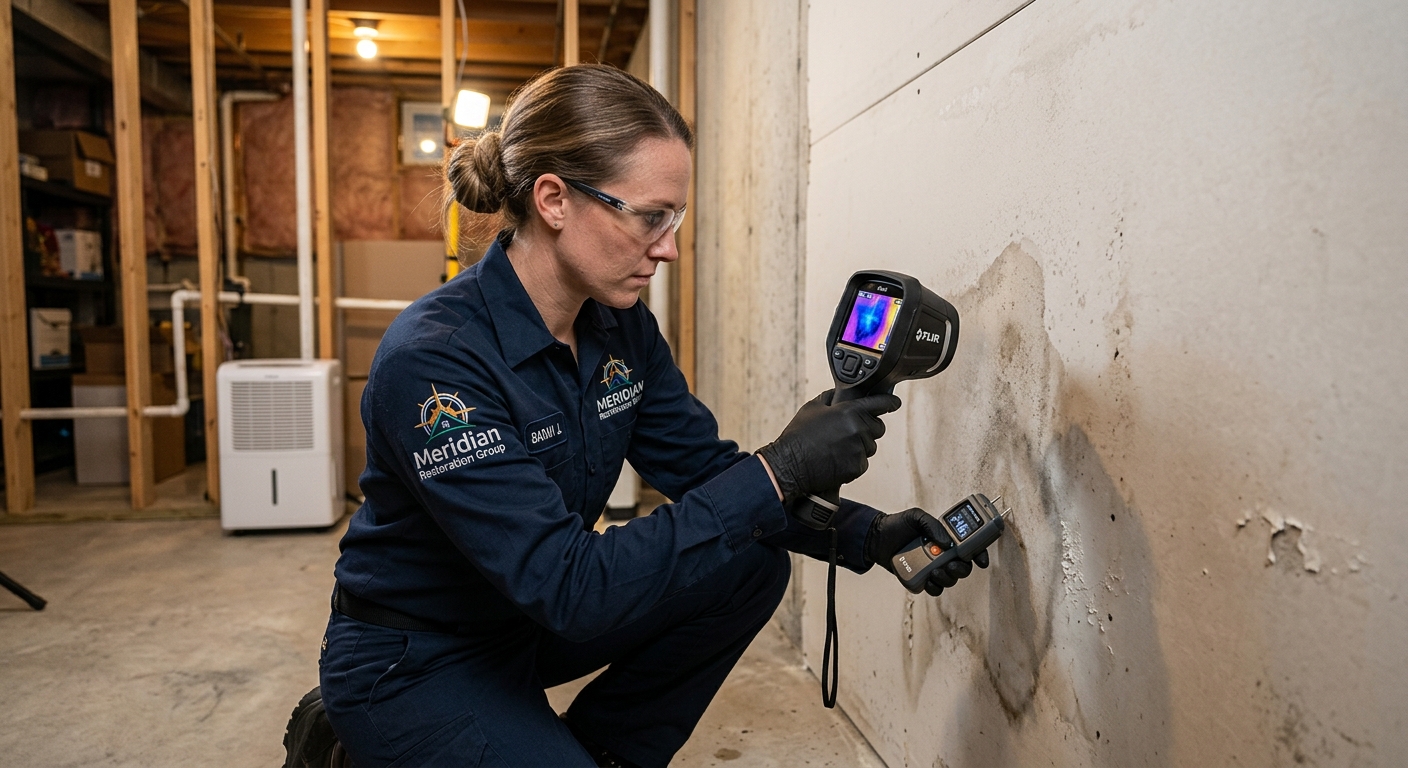
This is where instrumentation earns its keep. Thermal imaging documents the true extent of saturation in a way the eye cannot dispute. Moisture readings taken daily create a drying curve that proves the structure was dried properly and to standard — not over-dried to inflate the bill, not under-dried to invite a mold claim later. That record protects the property owner and the carrier at the same time, which is exactly why adjusters move faster when they see it.
There is a second, quieter benefit: a documented job resists the supplement fights that drag claims out for months. When the scope is tied to measured evidence from day one, there is far less to argue about later. The property owner is not stuck relaying messages between a contractor and an adjuster who distrust each other — the documentation does the talking.
When you choose a restoration company, the speed of the first truck matters for the damage. But the quality of the documentation is what determines whether the claim closes in weeks or drags into a season. Ask any restorer you are considering a simple question: what will I receive at the end? If the answer is not 'a documented file your adjuster can act on,' keep calling.